
The 2026 Web Design Roadmap
INTRODUCTION
The year is 2026, and the web design landscape looks nothing like it did even 24 months ago. If you’re still starting your projects by manually drawing every rectangle in Figma or spending days troubleshooting CSS floats, you’re not just behind—you’re becoming obsolete.
We’ve officially moved past the era of “static” websites. Today, the web is a living, breathing ecosystem powered by Generative UI, AI-driven personalization, and Hyper-performance standards. The tools have changed, the user expectations have skyrocketed, and the “old reliable” methods of 2023 are now the bottlenecks killing your conversions.
In this post, we’re laying out the 2026 Web Design Roadmap. We’ll explore why the “pixel-pusher” is being replaced by the “system architect” and how you can pivot your skills to stay indispensable in an automated world.
Here is the breakdown of why the “old way” is failing and what the new roadmap looks like.
1.The Shift from Static to “Adaptive” Experiences
The Old Way:
You design a desktop version, a mobile version, and maybe a tablet breakpoint. The content stays the same for every visitor.
The 2026 Way:
AI-Driven Personalization. Websites are now “living” interfaces. In 2026, top-tier sites use AI to adjust layouts, call-to-actions, and even color schemes in real-time based on user behavior. If a visitor is browsing at night, the site flips to a high-contrast dark mode; if they are a returning customer, the hero section highlights their most-used features immediately.
2.From “Pixel Pushing” to “Prompt Engineering”
The Old Way:
Spending 10 hours manually drawing wireframes and basic UI components in Figma.
The 2026 Way:
Generative UI & “Vibe Coding.” Modern designers use AI as a co-pilot. Tools now generate production-ready code from simple text prompts or hand-drawn sketches. Your value as a designer has shifted from executing the pixels to curating the vision. You are no longer just a “builder”; you are an architect of AI systems. Learn AI Website Builder Mastery course to know more about top AI Website builder tools.
3.Performance is the New Aesthetic
The Old Way:
Adding heavy animations and high-res images because “they look cool,” ignoring the 3-second load time.
The 2026 Way:
Sustainability & Speed-First Design. With mobile traffic now dominating nearly 60% of the web, performance is a legal and ethical requirement. In 2026, “Green Web Design” is standard. This means:
Variable Fonts: One file that handles all weights and styles, reducing server requests.
Vector-Heavy Layouts: Moving away from heavy bitmaps to SVG-based, fluid organic shapes.
Zero UI Elements: Using voice and haptic feedback instead of cluttered visual menus.
4.Breaking the Grid (Human-Centered Motion)
The Old Way:
Rigid, boxy layouts that feel like a digital flyer.
The 2026 Way:
Kinetic Typography & Micro-interactions. Users in 2026 expect a “tactile” web. Text that reacts to your scroll, buttons that “morph” when you hover, and layouts that use “anti-grid” structures to feel more organic and human. The goal is to remove the “machine-made” feel that early AI templates created.
What’s on the 2026 Roadmap? If you want to stay relevant, your learning list should look like this:
Mastering AI Workflows: Learning to use AI for wireframing, copy-drafting, and automated debugging.
No-Code/Low-Code Mastery: Using professional builders (like Divi 5 or Framer) to deploy complex sites in days, not months.
UX Psychology: Understanding why a user interacts with an element, since the how is now handled by tools.
Accessibility (WCAG 3.0): Ensuring your site is inclusive by default, not as an afterthought.
Bottom Line: Traditional web design was about building. Modern web design is about orchestrating.
CONCLUSION
The message for 2026 is clear: Web design is no longer a solo craft; it’s a symphony of human creativity and machine efficiency. The “Traditional Methods” aren’t failing because they lack beauty—they’re failing because they lack velocity and intelligence. In a world where AI can generate a landing page in seconds, your value as a designer lies in your ability to strategize, to empathize with the user, and to master the high-level systems that AI cannot yet touch.
You have two choices: continue building websites the way they’ve always been built and watch your margins shrink, or embrace the roadmap, master the new stack, and position yourself as a premium architect of the modern web.
The tools are ready. The roadmap is clear. Is your skill set ready for the journey?
Related Posts
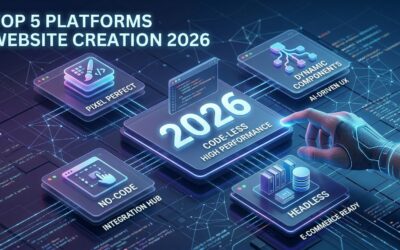
The 2026 AI Stack – The Top 5 Platforms Redefining Website Creation
INTRODUCTION: THE SHIFT FROM TOOLS TO AGENTS For decades, the "Web Stack" meant a combination of hosting, a CMS like WordPress Web Design Tool, and a design tool like Figma. In 2026, the stack has evolved. We are no longer just using tools; we are collaborating with...
Can AI Replace Web Designers – The Truth in 2026
Introduction Artificial Intelligence is no longer a futuristic concept—it’s actively transforming industries, including web design. Tools that once required hours of manual work can now generate complete websites in minutes. This has sparked a critical question among...
AI Website Builders in 2026 – What Changed and What You Must Know Before Starting
Introduction If you’ve been thinking about building a website, 2026 is the easiest time in history to get started. What once required coding knowledge, design skills, and multiple tools can now be done in minutes using AI-powered platforms.But here’s the reality: AI...